
How to Optimize a Central Kitchen for Pastry, Cakes, and Bakery Production Without Heavy Automation
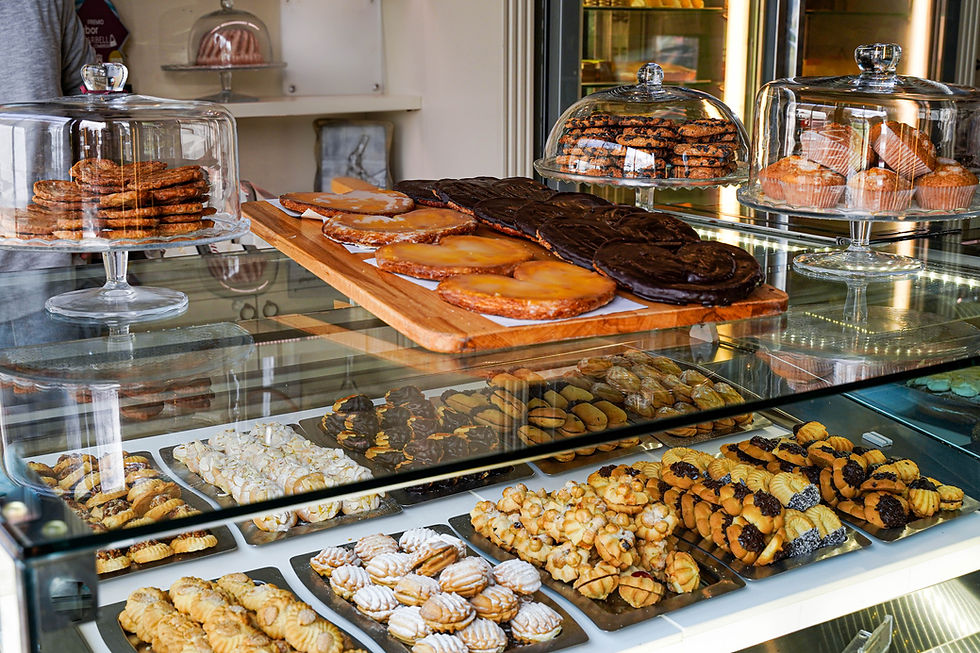
This case describes an optimization project implemented by Easy2Cook in a large centralized pastry and bakery production facility located in a major European capital. At the start of the project, the production already operated at a significant scale and was perceived by the client as “well organized.” The management believed that further productivity growth was only possible through large-scale industrial automation such as long conveyor systems for laminated dough, croissants, puff pastries, and similar products. Our task was to challenge this assumption and demonstrate that high efficiency can be achieved through small and medium automation tools combined with process redesign, without converting the facility into a fully industrial bakery.
The production included a wide range of pastry and bakery items: laminated dough products, croissants, sandwiches, cakes, sponge-based desserts, chocolate products, creams, ganaches, and bread baked in both rotary and deck ovens. There was no strict division between bakers, pastry chefs, confectioners, dough mixers, or packers. All employees were universal operators capable of working across multiple stages of production. This universality was preserved and intentionally strengthened during the optimization, as it provided flexibility and resilience.
The first and most radical change concerned weighing and dosing. The production relied heavily on scales. Every operation involved weighing ingredients, portions, creams, and semi-finished products. While this approach looked precise, it created massive time losses and constant micro-pauses in the workflow. Easy2Cook proposed a complete elimination of scales in daily operations. All weighing was replaced with calibrated measuring containers, volumetric scoops, and standardized molds. This inevitably introduced a small deviation in accuracy. However, this deviation was intentionally incorporated into the cost calculation and recipe tolerance. Through time-and-motion studies, chronometric analysis, and calculation of output per worker per hour and per shift, we demonstrated that this approach increased individual worker productivity by three to four times. The financial impact of minor ingredient variance was negligible compared to the labor savings and throughput growth. This decision alone fundamentally changed the rhythm of production and removed one of the most underestimated bottlenecks.
The second major intervention was a structural separation of production into two functional groups: preparatory staff and finishing staff. Preparatory workers focused exclusively on semi-ready products. These included dough preparation, baking of base products, cooking of creams, ganaches, sauces, and fillings, chocolate melting and tempering, and preparation of protein components using sous-vide technology. All semi-ready products were vacuum packed, labeled, and stored under controlled conditions.
Finishing teams were responsible only for assembly and finalization. For example, sous-vide cooked meat products were sliced on slicers, fresh vegetables were cut, previously baked toast bread was taken from storage, sauces were unpacked, and sandwiches were assembled. Pastry finishing followed the same logic: prepared bases, creams, and decorations were assembled without interruptions for preparation tasks. This clear division eliminated task-switching, reduced cognitive load, and stabilized output quality. Over six months, this reorganization resulted in a 42 percent increase in finished product output while maintaining the same labor cost level. This became one of the strongest productivity gains achieved by Easy2Cook in pastry and bakery production.
The third optimization concerned product geometry. Several pastry items were originally designed to use sponge cake trimmings and offcuts. While the taste profile was excellent, shaping these products into complex traditional forms required excessive manual labor. Easy2Cook proposed redesigning the shape while preserving taste and portion value. The new shapes were slightly unconventional but significantly faster to produce. Although there was initial concern about customer acceptance, the brand’s long-standing reputation and customer trust ensured a smooth transition. Consumers accepted the new shapes positively, and the production achieved a substantial productivity increase without compromising perceived quality.
The fourth intervention focused on raw material matrix analysis. Easy2Cook developed a detailed raw material matrix grouping products by shared ingredients and technological similarity. This allowed the team to redesign shift planning and production sequencing. Instead of producing items strictly by category, production was organized by ingredient logic and process compatibility. This eliminated unnecessary equipment downtime and waiting periods. Equipment no longer stood idle waiting for containers from washing, cooling capacity, slicing availability, or packaging zones.
Each operation performed by every employee was timed and mapped. Using analytical modeling and AI-assisted scheduling tools, the entire sequence was reorganized to ensure continuous flow. As a result, production capacity was freed by an additional 28 percent without purchasing new equipment. The investment required for this phase, including technological audit and implementation, amounted to approximately 15,000–20,000 euros and took three to four months. The economic effect for the enterprise, given the scale of the network, amounted to hundreds of thousands of euros annually.
An important strategic aspect of this project was the preservation of workforce universality. Employees were not narrowly specialized; instead, they were trained to operate across processes. This increased flexibility, reduced dependency on individual specialists, and simplified scheduling. Universal staff combined with standardized semi-ready products created a highly resilient production system.
This case demonstrates that centralized pastry and bakery production does not require massive industrial lines to achieve high efficiency. Small automation tools, volumetric standardization, process separation, shape redesign, raw material matrix planning, and intelligent scheduling can deliver dramatic productivity gains with minimal capital expenditure. The Easy2Cook approach focuses on eliminating hidden inefficiencies rather than replacing people with machines. The result is a scalable, flexible, and economically robust production model suitable for modern multi-format food businesses.


Comments