top of page

Central Kitchens & Food Factories


Why Does a Pizza & Sushi Delivery Network Need a Factory Kitchen?
The Theoretical Benefits Industry experts typically list a long catalog of advantages when advocating for a centralized factory kitchen. Centralization of supply and procurement systems promises smoother operations. Standardized quality control ensures uniform taste and sensory properties across all locations. Fixed costs decline through lower payroll and reduced headcount. Raw material procurement becomes cheaper through bulk purchasing. Staff theft and abuse opportunities s
9 min read


The Plastic Paradox: A Masterclass in Food Packaging Strategy
The story of food packaging is the story of civilization itself. From the simple clay pot that first allowed our ancestors to store grain, to the complex, multi-layered polymers that protect our fresh food today, the act of containing what we eat has always been a foundational human need. Yet, in the modern culinary industry, the role of packaging has undergone a profound transformation. It is no longer just a passive vessel; it has become a dynamic, active participant in a p
6 min read


The Two-Caste Kitchen: Why Your Workforce Structure Is Killing Your Food Safety
Let me ask you a question that most kitchen owners never think to ask. How much product does one cook produce per hour? If you don't know the answer, you are running your kitchen blind. Here is a simple calculation that will tell you everything you need to know about your labor efficiency. Multiply all the dishes you sold in a month by their gross weight in grams, and convert the total to kilograms. Divide that number by the number of days in the month. Divide that by the num
4 min read


The Certificate Is Not the System: Why HACCP Implementation Fails Before It Starts
Let me tell you something that will save you a lot of money and frustration: purchasing a HACCP certificate gives you exactly zero guarantee that HACCP will actually work in your establishment. I have seen too many operations spend significant sums on consultants and certification packages, only to discover that nothing has changed on the line. The procedures are documented, the binders are filled, the certificates are framed and hung on the wall. But the food is still handle
4 min read


Steam Cleaning in Commercial Kitchens: A Practical HACCP-Based Sanitation Protocol
Steam Cleaner for commercial kitchens By Fedor Sokirianski For many years I have worked with food production facilities, commercial kitchens, catering operations, dark kitchens, and restaurant environments. One conclusion has become increasingly clear: high-temperature steam cleaning is often more practical, more economical, and more effective than relying exclusively on chemical detergents and degreasers. Modern steam generators capable of producing dry steam at temperatures
5 min read


Troubleshooting Modified Atmosphere Packaging Shelf-Life Failures in Ready Meals Production
I am frequently invited to solve shelf-life issues involving ready meals packaged in Modified Atmosphere Packaging. In many production facilities, there is no microbiologist or food chemist with deep expertise in food microbiology and the complex interactions that occur during food processing, cooling, packaging, and storage. As a HACCP and GMP auditor, I have developed a practical troubleshooting checklist that I routinely use when investigating sources of primary contaminat
5 min read


Ultraviolet-C Tunnel Technology for Shelf-Life Extension of Bakery Products and Ready Meals: Scientific Evidence, Industrial Applications, and Practical Experience
Introduction Food manufacturers continuously strive to improve product safety, reduce spoilage losses, and extend shelf life while maintaining clean-label formulations and minimizing the use of chemical preservatives. Despite the widespread implementation of Hazard Analysis and Critical Control Points systems, complete elimination of microbiological contamination remains challenging in real production environments. Many contamination events occur after thermal processing duri
6 min read


Kazakhstan's Ready-to-Eat Food Market: An Industry Worth Up to KZT 360 Billion Enters the Scaling Phase
Ready-to-Eat Food Is Becoming a Separate Segment of the Economy Kazakhstan's ready-to-eat food market is experiencing one of the most dynamic periods in its history. According to Veronika Daugaliyeva, Chairwoman of the Self-Regulatory Organization of Public Catering of Kazakhstan, the ready-to-eat food segment already accounts for 20–30% of the country's total foodservice turnover, with an estimated market size ranging from KZT 240 billion to KZT 360 billion annually (Source:
4 min read

Cook&Chill: the tutorial for development chefs and process technologists
Revolutionize your large-scale food production with Cook&Chill technology — the scientifically-proven system that preserves freshness, nutrition, and flavor for up to 22 days without preservatives. From vacuum-sealing to shock-chilling, discover how leading caterers, hospitals, and food service operators maintain quality, reduce waste, and serve thousands of safe, delicious meals daily. Perfect for kitchens of any size.
15 min read
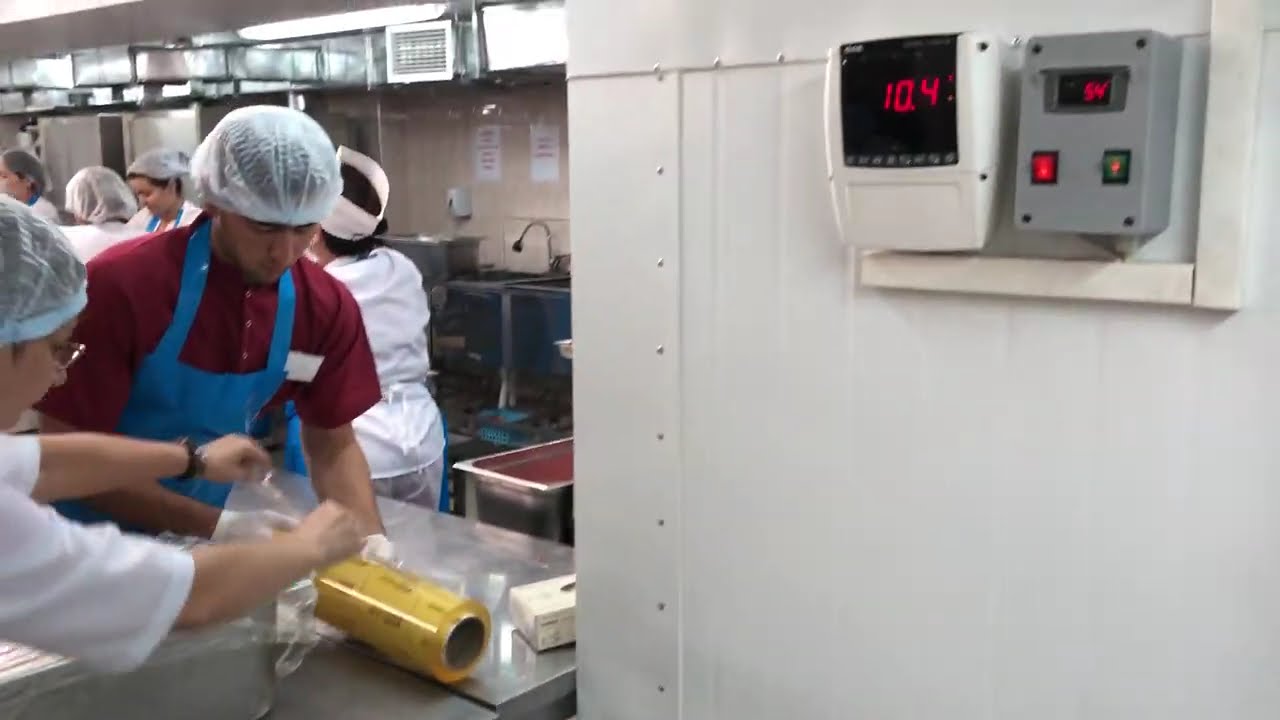
How to Reduce Food Cost in Meatballs and Cutlets by 20%
Central kitchens and food factories lose money on minced products every day.
This video demonstrates a proven industrial process to cut food cost in meatballs and cutlets without affecting taste or texture — fully compatible with high-volume production.
3 min read

NPD, process technologists, development chefs workshops wordwide by Easy2Cook
We run professional workshops for chefs, process technologists, and restaurant owners all over the world. Some of our training centers are equipped with high-end, innovative cooking technologies, including CookTech systems, induction buffet systems, rare-oxygen packaging (ROP) equipment, bulk cook–quench systems, large-volume sous-vide solutions, induction heavy duty woks for stir-fry, Chinese high-speed steamers, slow cookers, pressure steamers, and professional fryers. Our
1 min read


Centralized Catering for Industrial Enterprises: A Scalable Food Production Model
1. Prerequisites for Reorganizing the Catering System of Modern Industrial Enterprises For decades, large industrial enterprises with workforces exceeding 1,000 personnel have recognized staff catering as a critical pillar for supporting core production programs and overall enterprise success. In contemporary economic conditions, providing meals for the workforce transcends a simple social benefit; it is a fundamental operational necessity that directly impacts labor capac
11 min read
Be The First To Receive The Latest News
bottom of page