top of page

Ready-to-Eat & Ready-to-Cook Meals


Easy2Cook Guide to Low-Temp Slow Cooking in Combi & Convection Ovens
What if I told you that 90% of your prep load could run itself overnight?
No, I'm not talking about buying more expensive equipment.
I'm talking about using the gear you already have—but using it right.
Here's the reality: most commercial kitchens are still cooking the same way they did 20 years ago.
Shift after shift, chefs babysitting ovens, flipping trays, checking probes.
Meanwhile, combi ovens are sitting there capable of running like gastrobots—fully autonomous co
6 min read


How to Choose a MAP Sealing Machine: A Comprehensive Guide for Food Technologists
Modified Atmosphere Packaging (MAP) technology has been actively used for over 15 years in meat processing, fish processing, dairy enterprises, culinary shops, and restaurants. MAP equipment can extend the shelf life of perishable products by 3–4 times. However, choosing the right machine is not a simple task. This article breaks down the key criteria for selecting MAP packaging equipment. Main Types of MAP Equipment Depending on the scale of production, product range,
5 min read


Troubleshooting Modified Atmosphere Packaging Shelf-Life Failures in Ready Meals Production
I am frequently invited to solve shelf-life issues involving ready meals packaged in Modified Atmosphere Packaging. In many production facilities, there is no microbiologist or food chemist with deep expertise in food microbiology and the complex interactions that occur during food processing, cooling, packaging, and storage. As a HACCP and GMP auditor, I have developed a practical troubleshooting checklist that I routinely use when investigating sources of primary contaminat
5 min read


Trends in the Ready-to-Eat Food Market, Kitchen Factories, Micro-Markets and Production Transactions in 2026The ready-to-eat food market in Russia has ceased to be a secondary category within reta
The ready-to-eat food market in Russia has ceased to be a secondary category within retail and foodservice. It is becoming an independent industrial sector where sales are growing, major transactions are taking place, investors are acquiring production assets, and companies are building centralised factories for the production of packaged meals, sandwiches, breakfasts, salads, hot dishes, frozen meals and products for retail chains, micro-markets, vending, coffee shops and de
11 min read

NPD, process technologists, development chefs workshops wordwide by Easy2Cook
We run professional workshops for chefs, process technologists, and restaurant owners all over the world. Some of our training centers are equipped with high-end, innovative cooking technologies, including CookTech systems, induction buffet systems, rare-oxygen packaging (ROP) equipment, bulk cook–quench systems, large-volume sous-vide solutions, induction heavy duty woks for stir-fry, Chinese high-speed steamers, slow cookers, pressure steamers, and professional fryers. Our
1 min read
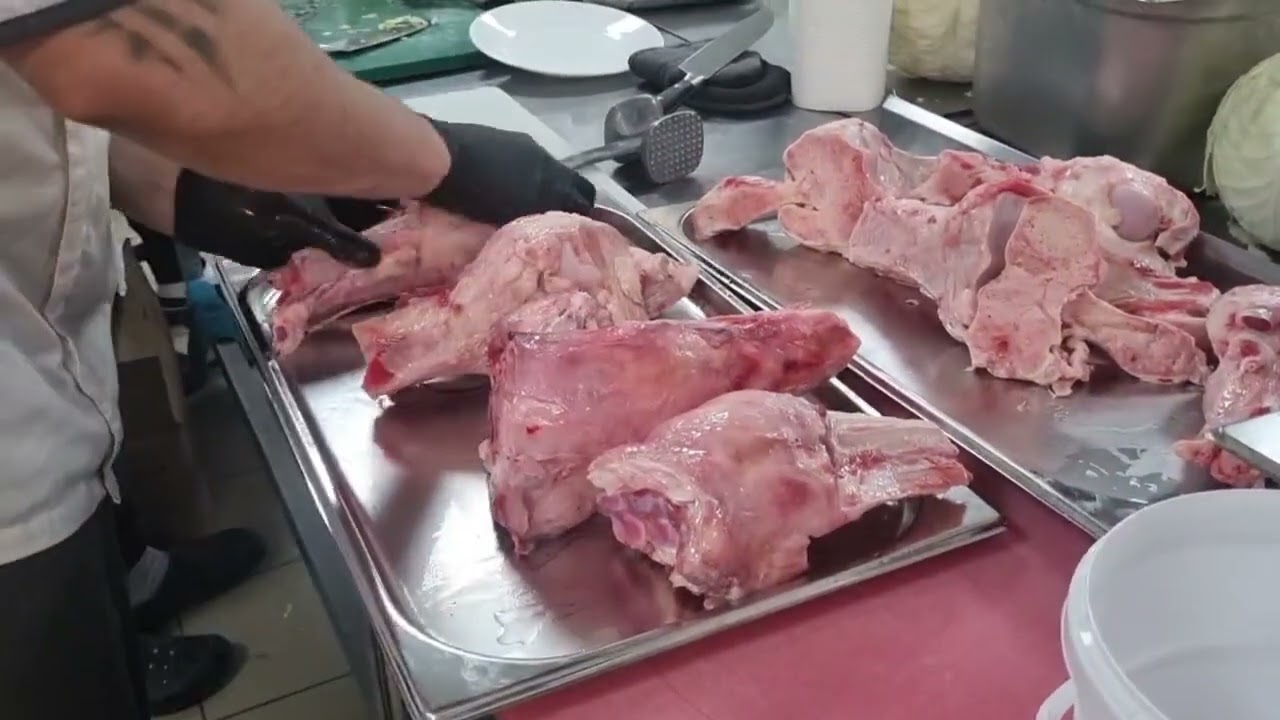
How to cook broth - large volumes in combi oven (combi steamer)
We prepare broths in four different ways. Method 1. We produce broth through meatball production using donut machines. Instead of oil, we pour water into the machine, and instead of dough we load minced meat or fish into the donut hopper. As a result, we get a very large quantity of meatballs and a large volume of broth at the same time. This method is fast and highly productive. Method 2. We cook broth using R.O.P. technology in polymer sleeves. The broth is prepared in HDPE
1 min read


Daily and Deli meals production and distribution
Why mixing Daily and Deli in one targeting model destroys both Deli — food for satisfying appetite Human needs are in constant competition. Biological needs compete with social and even spiritual ones. Eating, at its core, is an entirely physiological process. Food is energy — a kind of “fuel” for the entire body and its “flight control center,” the brain. Hunger is one of the most ancient instincts that has shaped human evolution, driving the development of tools, cognitive
28 min read


Growth of the ready-to-eat food and cooked food stores market. Preconditions and drivers.
Social and economic changes in society are changing people’s eating behavior, their culinary and gastronomic habits and preferences. Recent trends in urban nutrition indicate that the population is ready to spend more money in food establishments, food delivery restaurants, canteens, and cafés, provided that the following conditions are met: the offer is balanced in terms of the price–quality ratio; the price fits into the concept of a “daily food budget”; there is trust in a
25 min read


Easy2Cook Launches a Breakthrough UV Conveyor System for Safe Ready MealsA patented UV-C tunnel extends shelf life up to five days without preservatives or probiotics.
Moscow, Russia — 2025 — The food-tech company Easy2Cook has developed a next-generation industrial ultraviolet (UV-C) disinfection system for ready-to-eat foods — a conveyor tunnel, in which PP and PET trays with salads and prepared dishes are exposed to controlled, high-intensity UV radiation. The project was designed by Easy2Cook’s Chief Technologist Fedor Sokiryansky, M.Eng.Tech . (Master of Engineering and Technology), in collaboration with the Atesy Industrial Engineerin
2 min read


How Easy2Cook Builds Ready-Meal Stores
A Systemic, Technological nal Foodservice For decades, foodservice formats that could be broadly described as canteens, culinary shops, or “home-style” food outlets appeared stable and predictable. Their menus rarely changed, production processes were built around manual labor, and consumer expectations were assumed to be static. The same dishes accompanied people throughout their entire lives: institutional meals in childhood, standardized menus in schools and universities,
44 min read


Innovations in Delivery and Ghost Kitchen Models by Easy2Cook
Introduction. Why delivery and dark kitchens required reinvention The rapid growth of food delivery over the last decade exposed structural weaknesses in traditional restaurant and catering models. Rising labor costs, unstable demand peaks, last-mile complexity, and growing expectations for speed and consistency created a system that functioned only under ideal conditions. Most operators attempted to scale delivery by adding couriers, expanding menus, or opening multiple kitc
20 min read
Be The First To Receive The Latest News
bottom of page